If you have ever walked into a room that feels ten degrees colder than the rest of the house, you already know what poor insulation feels like. For many Westchester homeowners, a chilly bedroom, a heating bill that keeps climbing, or a stubborn ridge of ice along the roofline in January are all signs that a home's insulation is not doing its job anymore. Finding the right home insulation contractor in Westchester, NY often makes the difference between a house that fights the weather all winter and one that simply stays comfortable.
It is easy to assume these issues are just part of owning an older home, something to live with rather than something to fix. In reality, most of them trace back to a handful of specific, identifiable problems that a trained eye can spot in a single visit. Insulation is rarely glamorous, but it is one of the few home improvements that quietly affects almost everything else, from comfort to indoor air quality to the lifespan of the heating and cooling equipment.
In this guide, we will look at why insulation matters so much in our region, the warning signs worth paying attention to, the materials we work with, and what you can expect when you bring in a professional to handle the job.
Insulation does more than keep a house warm in January or cool in July. It sets the tone for how the entire home performs throughout the year. When insulation is doing its job, the furnace and air conditioner do not have to run constantly just to keep up, which lowers monthly bills and reduces wear on the equipment over time. A system that is not fighting against constant heat loss also tends to last longer, since it cycles on and off the way it was designed to instead of running nonstop.
Insulation also plays a quiet role in controlling moisture. Warm, moist air that escapes into a cold attic can condense and lead to mold growth or rot in the roof deck, and homes with weak insulation are far more prone to ice dams forming along the eaves in winter. According to the U.S. Environmental Protection Agency's ENERGY STAR program, sealing air leaks and adding the right amount of insulation can save homeowners an average of fifteen percent on heating and cooling costs each year, which adds up to real money over the life of a home.
This matters even more in Westchester, where many homes were built decades before modern insulation codes existed. A house from the 1950s or 60s can look perfectly solid from the outside while the walls and attic hold onto only a thin, settled layer of insulation that lost most of its effectiveness years ago. Older plaster walls, in particular, were rarely insulated at all when they were first built, which leaves them relying almost entirely on whatever has been added since.
Comfort is also not evenly distributed in a poorly insulated home. Upstairs bedrooms often run hotter in summer and colder in winter than the main floor, simply because heat naturally rises and escapes through an under-insulated attic. Fixing that imbalance is usually less about the HVAC system and more about the insulation layer sitting between the living space and the outdoors.
A few warning signs tend to show up again and again in homes that need attention.
If any of these sound familiar, the issue often is not just the insulation itself but air leakage working alongside it. Pairing insulation upgrades with professional air sealing usually delivers the biggest jump in comfort, since the two work together to keep conditioned air where it belongs instead of drifting out through gaps around outlets, pipes, and framing. Insulation without air sealing is a bit like wearing a heavy coat left unzipped. It helps, but it is not doing the whole job. A home energy audit is often the fastest way to find out exactly where a house is losing conditioned air.
Every home is different, and the right material depends on the space, the budget, and the specific problem we are trying to solve. We typically recommend one of the following, sometimes combining more than one in the same project depending on what a particular room or cavity actually needs.
Spray Foam
Our spray foam insulation expands to fill gaps and cracks that other materials simply cannot reach, which makes it a strong choice for rim joists, sill plates, and other tricky areas where air tends to sneak in. It also adds a bit of structural rigidity and holds up well in damp areas like basements and crawl spaces, where materials that absorb moisture can lose their effectiveness over time. There are real, measurable benefits of professional spray foam insulation that go well beyond a warmer house, including lower humidity and fewer drafts.
Foam Board
For open, easily accessible cavities like basement walls or unfinished rooms, foam board insulation installation is another option worth considering. It offers a high level of insulating value per inch of thickness, which makes it especially useful in spaces where wall depth is limited. Homeowners are often surprised to learn just how much a professional foam board installation can save compared to a rushed do-it-yourself job.
Blown In Insulation
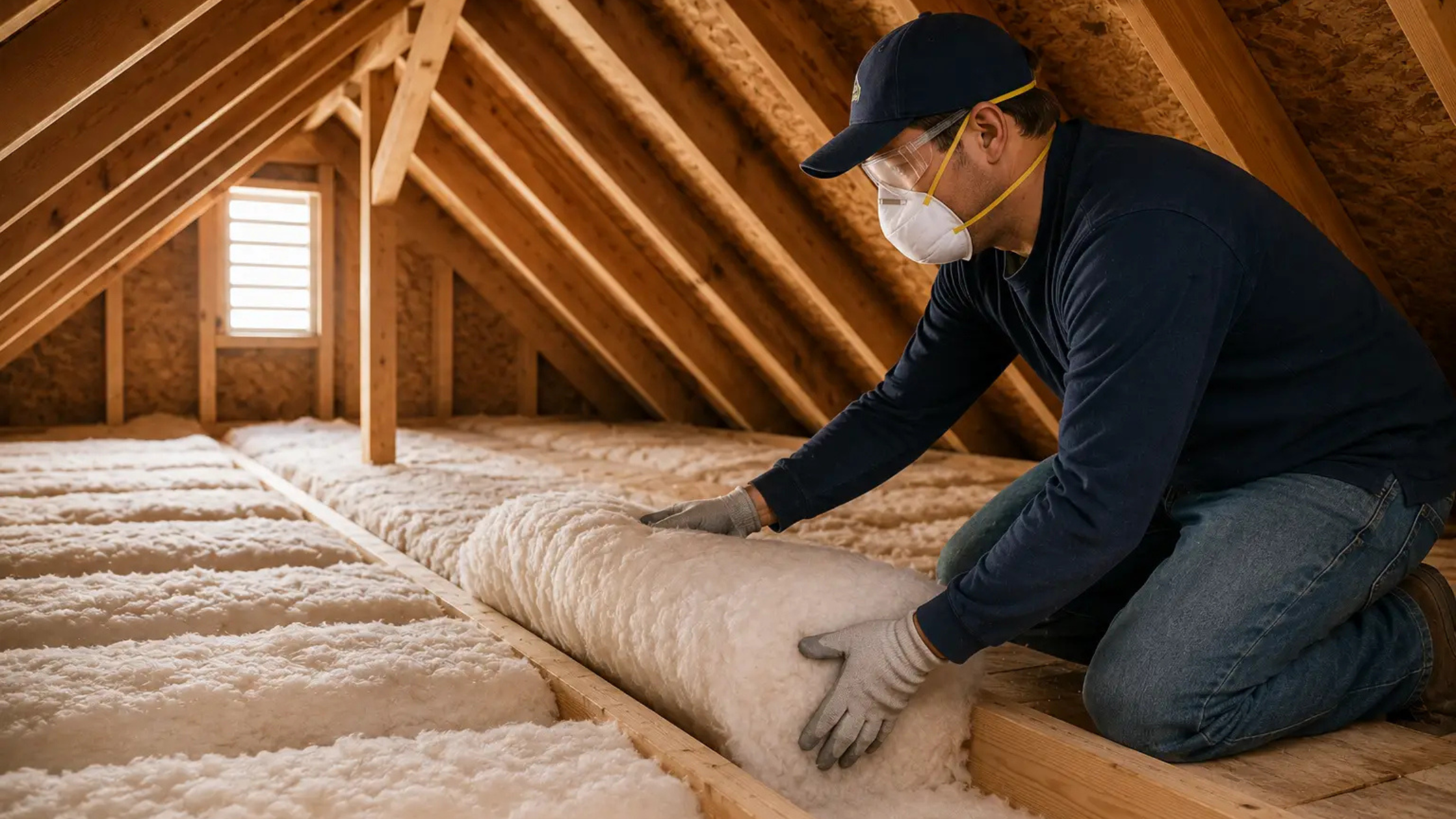
Our blown-in insulation service works well in attics and existing walls because it can be installed without tearing into finished surfaces, making it one of the least disruptive ways to add coverage to an older home. It settles into odd-shaped spaces and around obstructions like wiring and plumbing far more easily than rigid materials can, which makes it a practical choice for retrofitting a home that was never properly insulated to begin with. There are a number of well-documented benefits of upgrading home insulation that show up within the first heating season alone.
Attic and Wall Insulation
For homes that need a more complete upgrade, our attic and wall insulation services address the areas where the most heat is typically gained or lost, giving the rest of the home's systems less work to do. We measure existing coverage against current recommended levels before deciding how much material a space actually needs, rather than applying a one-size-fits-all approach to every home we visit.
A good project starts with a home energy assessment, where we walk through the house, check the attic and any accessible wall cavities, and identify exactly where performance is falling short. From there, we explain the recommended materials and give a clear price before any work begins, so there are no surprises once the crew arrives. Every home has its own quirks, and a proper assessment accounts for those instead of relying on guesswork.
Installation itself should be clean, code-compliant, and mindful of ventilation, since insulation installed without attention to airflow can sometimes create new problems instead of solving old ones. A rushed or careless installation can trap moisture in places it should not be, so it is worth asking any contractor how they plan to handle ventilation before work begins. If cost is a concern, we also walk homeowners through financing options that make it easier to move forward without paying the full amount upfront.
Once the work is finished, a reputable contractor will walk you through what was done and why, so you understand exactly what is now protecting your home. This kind of transparency is part of what separates a lasting upgrade from a quick patch job that needs to be redone in a few years.
Insulation rarely works in isolation. It is one piece of what building professionals call the home's envelope, which also includes air sealing, ventilation, and the windows and doors that separate indoor and outdoor air. Improving one piece while ignoring the others usually means leaving savings on the table.
For homeowners planning a broader upgrade, it often makes sense to think about insulation alongside HVAC equipment as well. A right-sized heating and cooling system paired with strong insulation works far more efficiently than an oversized system trying to compensate for a leaky, under-insulated house. It's worth knowing what to look for in an HVAC company before signing on for any equipment upgrade, and homeowners considering central air specifically may want to talk with our HVAC installation team about how a new system and improved insulation work together. Thinking about the whole picture, rather than one project at a time, tends to produce the best long-term results.
Not every insulation job is the same, and not every contractor approaches it the same way. It is worth asking how long a company has been working in Westchester specifically, since local experience means a crew already understands the quirks of the area's older homes, from balloon framing to inconsistent attic access.
A trustworthy contractor should be willing to explain their recommendations in plain language, walk through material choices honestly, and provide a written estimate rather than a rough verbal number. If a company pressures you to sign on the spot or cannot clearly explain why they are recommending a particular material, that is worth treating as a red flag rather than brushing aside. Many of the same questions worth asking before hiring an HVAC contractor apply just as well when vetting an insulation contractor.
It also helps to ask about warranties on both materials and labor. A contractor confident in their work should be comfortable standing behind it for years, not just for the first few months after installation.
A well-insulated home is quieter, more comfortable, and easier on the budget every single month. The right insulation upgrade tends to pay for itself over time through lower bills and fewer repairs down the road. Working with an experienced home insulation contractor in Westchester, NY takes the guesswork out of the process and gives homeowners a clear path from a drafty, uneven house to one that finally feels the way it should.
We are AI Greenhome, a BPI Gold Star Certified contractor installing insulation and HVAC upgrades across New York's five boroughs, Westchester, Long Island, and surrounding areas. We handle every step from the initial home energy assessment through rebate paperwork. Call us at (646) 756-4866 or schedule your free consultation at ai-greenhome.com.

Cold spots, drafts, energy bills that run higher than similar-sized homes, and ice dams forming on the roof are all signs worth having checked out by a professional. A home energy assessment can confirm whether insulation is actually the cause.
Most projects take anywhere from a single day to a few days, depending on the size of the home and the type of insulation being installed. Attic-only projects tend to move faster than whole home upgrades.
It depends on the space. Spray foam works best for sealing tricky gaps around framing and rim joists, while blown-in insulation is often the easier, less invasive choice for large attic or wall areas in an older home.
Most homeowners notice a real difference in comfort right away, and lower heating and cooling costs typically follow once the home is properly sealed and insulated.
Yes, we offer home energy assessments that let us walk through the house, identify problem areas, and provide a clear estimate before any work begins.